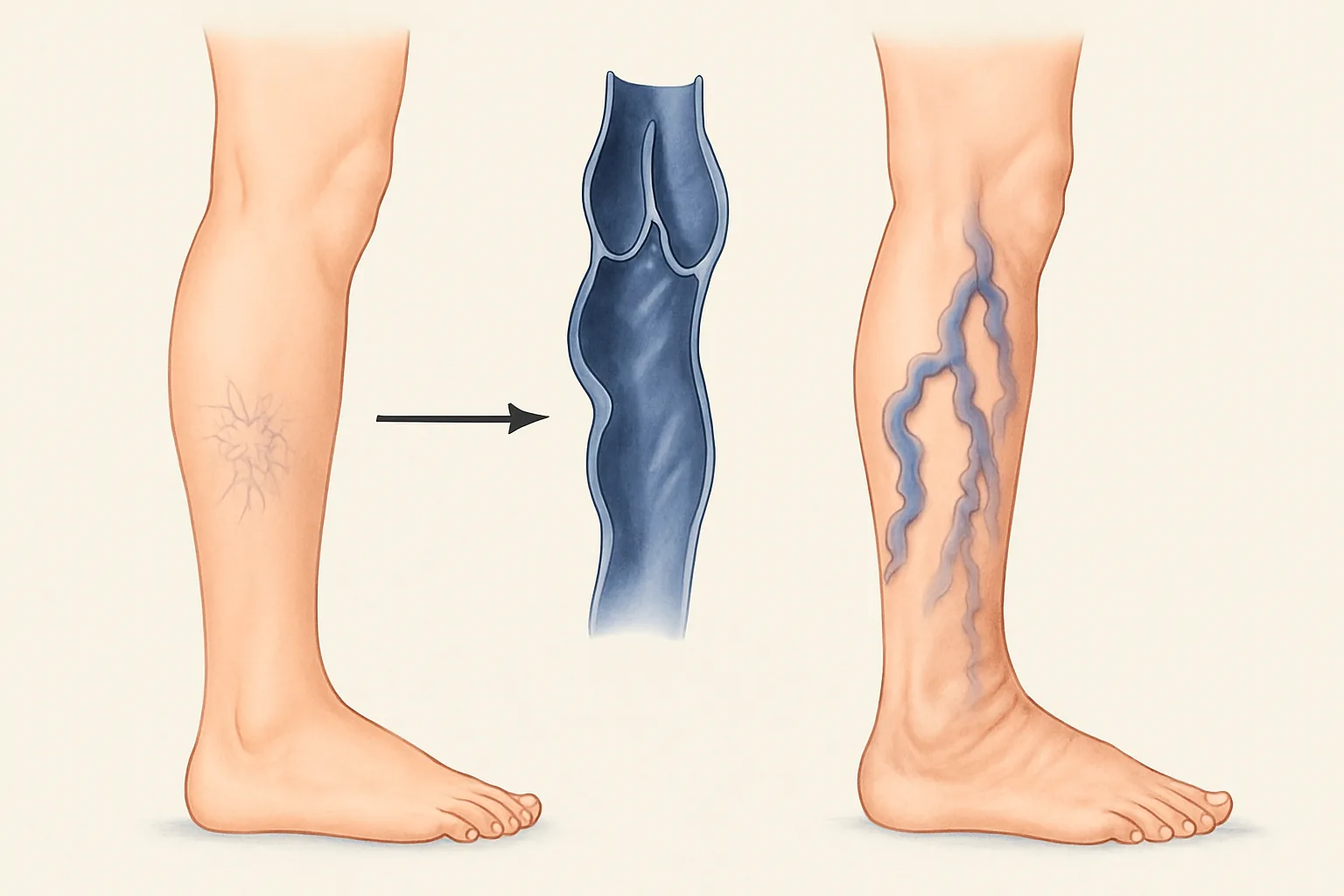
Varicose veins are enlarged, twisted veins that bulge visibly beneath the skin, most commonly in the legs. While many people think of them as purely cosmetic, varicose veins are actually a sign that the one-way valves inside your veins aren't working properly, allowing blood to flow backward and pool.
They're remarkably common: studies estimate that up to 30% of adults develop varicose veins at some point in their lives, with prevalence increasing with age. Some people experience no discomfort at all, while others deal with aching, heaviness, swelling, and itching that affects daily life.
Key Takeaways
- Varicose veins are swollen, twisted veins caused by faulty one-way valves that allow blood to pool in the legs
- They're extremely common and not always just cosmetic, they can cause significant discomfort and lead to complications
- Risk factors include genetics, prolonged standing, pregnancy, obesity, and age
- Conservative treatments (compression, exercise, elevation) are effective first steps for most people
- Modern medical procedures like sclerotherapy and endovenous ablation are minimally invasive with quick recovery
- You should see a doctor if varicose veins cause pain, skin changes, swelling, or bleeding
What Are Varicose Veins?
Veins carry blood back to the heart. In your legs, this means working against gravity, a job made possible by tiny one-way valves that open to let blood through and close to prevent backflow. When these valves weaken or fail, blood accumulates in the vein, causing it to stretch, swell, and become visibly tortuous.
Varicose Veins vs. Spider Veins
Spider veins (telangiectasias) are smaller, flat, web-like clusters of red or purple veins near the skin surface. They're usually cosmetic and rarely cause symptoms. Varicose veins are larger, raised, rope-like, and more likely to cause discomfort. Both can be signs of underlying chronic venous insufficiency (CVI), but varicose veins are more clinically significant.
What Causes Varicose Veins?
Several factors contribute to valve weakening and vein dilation:
- Genetics: The strongest predictor. If both parents had varicose veins, your risk exceeds 90%
- Prolonged standing or sitting: Occupations requiring long hours on your feet (teaching, nursing, retail) or sitting (office work, truck driving) reduce venous return
- Pregnancy: Increased blood volume, hormonal changes, and the growing uterus pressing on pelvic veins make varicose veins common during pregnancy. They often improve postpartum but may not fully resolve
- Age: Vein elasticity decreases with age, and valve wear accumulates over decades
- Obesity: Excess body weight increases pressure on leg veins
- Hormonal factors: Estrogen and progesterone relax vein walls, which is why women are affected more often, and why symptoms may fluctuate with menstrual cycles or hormone therapy
- Prior blood clots: A history of deep vein thrombosis can damage valves and lead to secondary varicose veins
Recognizing the Symptoms
Varicose veins don't always cause symptoms. When they do, common complaints include:
- Visible, bulging veins, blue or dark purple, often twisted or rope-like
- Heaviness or aching in the legs, especially after standing
- Swelling around the ankles, worsening through the day
- Itching over or around the affected veins
- Throbbing or cramping, particularly at night
- Skin changes near the ankles, darkening, dryness, or a hardened texture
Symptoms typically worsen with heat, prolonged standing, and toward the end of the day. They tend to improve with elevation and movement.
When Varicose Veins Become a Problem
Most varicose veins are manageable, but complications can develop over time if left untreated:
- Superficial thrombophlebitis: Inflammation and clotting in a varicose vein, painful, warm, and tender
- Bleeding: Varicose veins close to the skin surface can bleed significantly if injured
- Skin ulcers: Chronic venous pressure can lead to open sores near the ankle (venous ulcers)
- Lipodermatosclerosis: Hardening and inflammation of the skin and underlying tissue
How Are Varicose Veins Diagnosed?
Diagnosis is usually straightforward:
- Physical examination: Your doctor examines your legs while you're standing, noting the location and extent of varicose veins
- Duplex ultrasound: A painless imaging test that shows blood flow direction and identifies which valves are faulty. This is the standard diagnostic tool and helps plan treatment
- Medical history: Including family history, prior blood clots, pregnancies, and occupational factors
Treatment Options
Whether varicose veins need treatment depends on your symptoms, the severity of venous reflux, and any complications. Treatment doesn't always mean surgery, most people start with conservative approaches.
Conservative Management
- Compression stockings: Medical-grade graduated compression supports blood return and reduces symptoms. Your doctor will recommend the appropriate class and fit
- Regular exercise: Walking, cycling, swimming, and calf strengthening exercises activate the muscle pump. Even a daily 20-minute walk makes a measurable difference
- Leg elevation: Raise your legs above heart level for 15–20 minutes, several times daily
- Weight management: If applicable, losing excess weight reduces venous pressure
- Movement breaks: If your job involves prolonged standing or sitting, take short walking breaks every 30–60 minutes. Flex and pump your calves while seated
Minimally Invasive Procedures
When conservative treatment isn't sufficient, modern interventions are highly effective and typically outpatient:
- Sclerotherapy: A solution is injected into the vein, causing it to scar and close. Blood reroutes through healthier veins. Works well for smaller varicose veins and spider veins
- Endovenous laser ablation (EVLA): A thin laser fiber is inserted into the vein under ultrasound guidance, sealing it with heat energy. High success rates with minimal downtime
- Radiofrequency ablation (RFA): Similar to laser ablation, using radiofrequency energy. Both have comparable outcomes
- Foam sclerotherapy: A foam version of sclerotherapy for larger veins, more contact with the vein wall for better closure
Surgical Options
- Phlebectomy: Small incisions to remove varicose vein segments, often done alongside ablation
- Vein stripping: Traditional surgical removal, now largely replaced by minimally invasive techniques
After any procedure, compression stockings and walking are typically recommended during recovery. Most people return to normal activities within days.
Living with Varicose Veins
Whether you've had treatment or are managing varicose veins conservatively, daily habits make the biggest difference:
- Stay active. Your calf muscles are your second heart, every step pumps blood upward
- Wear compression when recommended. It may not be glamorous, but it works
- Watch for changes. New pain, skin discoloration, swelling in one leg, or any open wound warrants a doctor visit
- Don't cross your legs for extended periods. It doesn't cause varicose veins, but it can worsen symptoms
- Keep your skin moisturized. Dry, itchy skin over varicose veins is common, gentle moisturizers help
Many people feel self-conscious about visible veins. That's completely valid. Treatment can improve appearance alongside symptoms, and compression wear has come a long way in design and comfort.
When to See a Doctor
You should consult a doctor if:
- Varicose veins are causing persistent pain, heaviness, or swelling
- You notice skin changes around your ankles, darkening, hardening, or eczema
- A varicose vein bleeds (apply firm pressure and elevate the leg while seeking help)
- You develop a hard, painful lump along a vein (possible superficial thrombophlebitis)
- One leg suddenly swells more than the other, this could indicate a deep vein thrombosis and requires immediate evaluation
How LEVANA Can Help
Take the free LEVANA Leg Check™ to get a structured assessment of your leg symptoms, no diagnosis, just guidance. We'll help you understand what you're experiencing and what steps to consider next.
LEVANA provides exercises, educational content, and symptom tracking tools designed for people living with venous conditions, so you can take informed action every day.
Related Articles
- Preventing Varicose Veins: 5 Tips for Strong Veins, Five simple daily habits to help prevent varicose veins.
- From Spider Veins to Varicose Veins: Causes, Symptoms & Treatment, Understanding the difference between spider veins and varicose veins.
- Which Compression Stockings Really Help in Summer?, Finding the right lightweight compression wear for hot weather.
Related Conditions
This article is for informational purposes only and does not constitute medical advice. Always consult a qualified healthcare professional for diagnosis and treatment of venous conditions.
Take the next step in the app
Start with the free Leg Check for a structured overview, or register to follow a guided programme.